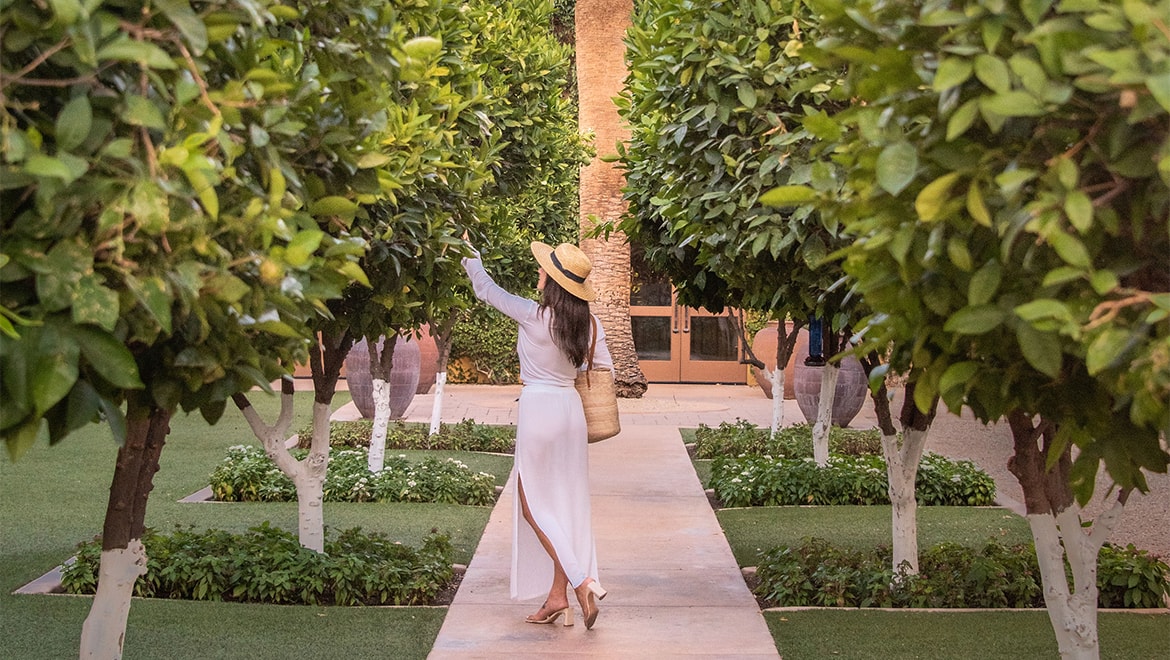
(intro copy)
Select Guest® member? Use free nights
Redeem your Select Guest free nights. If available, you may reserve multiple free nights on one reservation and then add additional paid nights on a separate reservation.
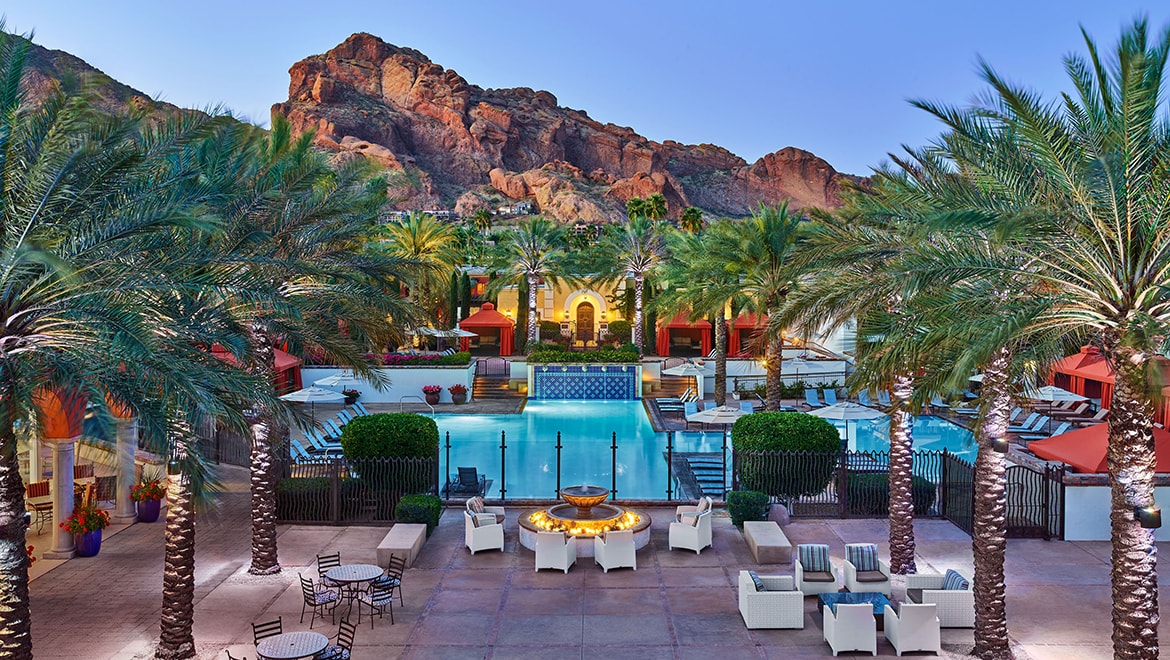
Montelucia is the Spanish translation for “mountain of light” which refers to the warm glow that radiates off Camelback Mountain as the sun sets behind it. In 2004, ownership of the property changed hands and that’s when the transformation began. The new owner at the time, accompanied by his architect and visual consultant, traveled to Spain and Morocco. There, they soaked up the sights, textures, aromas, the old world history and unique culture of those timeless lands, brought those elements back and infused it into every authentic hand-crafted detail.
This is a carousel. Use the Next and Previous buttons to navigate.
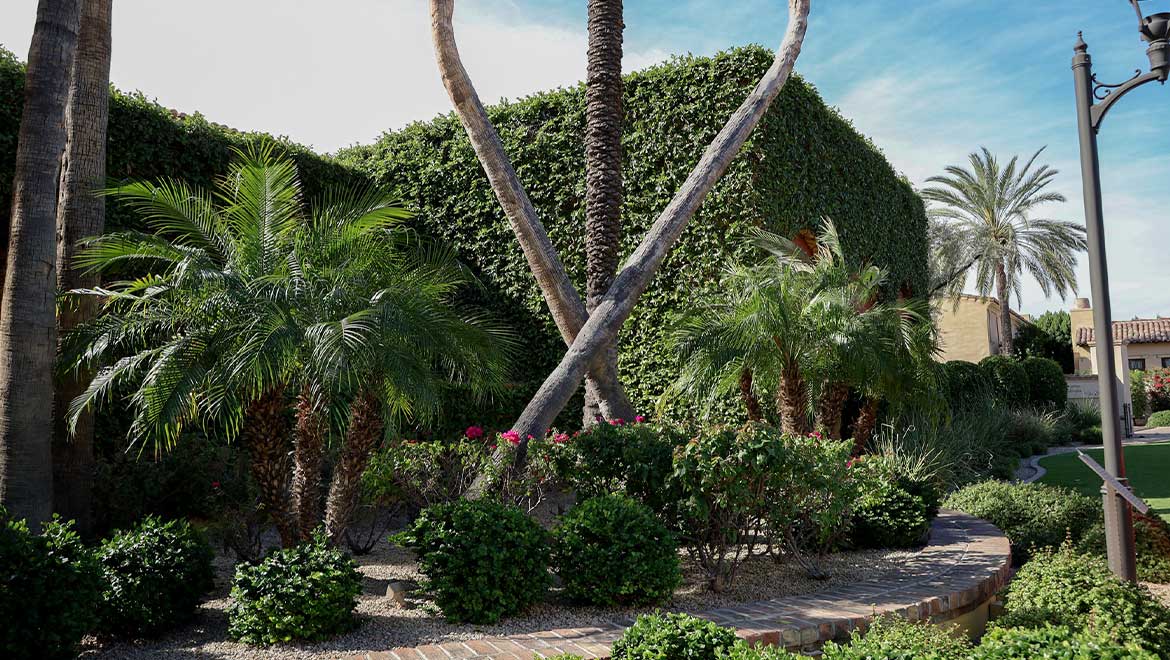
For centuries, Spanish explorer’s ventured to the southwest in search for treasure. Upon finding such riches, they left behind clues and markers to remind themselves where each prize was hidden. Today, a new kind of explorer comes to the Southwest, searching for material riches, but for a place to create memories. Travelers arrive in search of unparalleled experiences never before seen or felt and each time someone arrives at Omni Montelucia, they find that “X” truly does mark the spot and the treasures they have been searching for will be discovered.
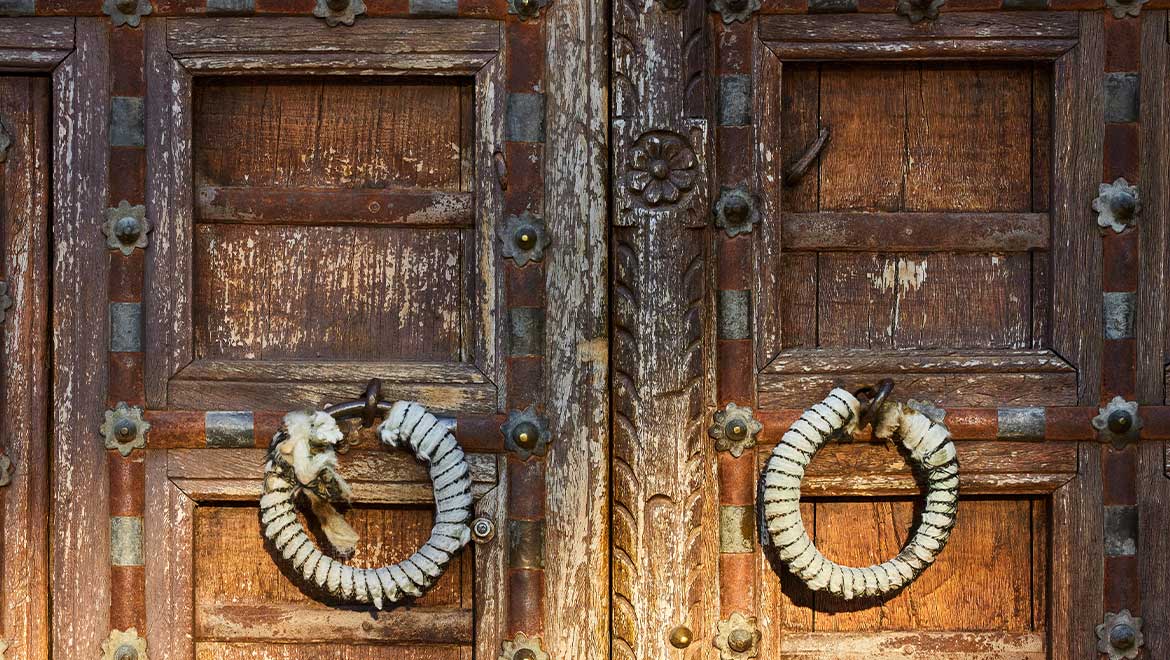
Our tour begins at the grand entrance of our property. Take a moment to admire the stunning architecture reminiscent of a Spanish Andalusian village. Notice the intricate details and vibrant colors that transport you to another time and place. The rustic doors at our property entrance came from 1560-1580 Spain and are made from pine wood. They feature a small “zaguan” (door within a door) and are completely studded with hand-forged iron “clavos” (decorative nails). As you step inside, let the warmth of the architecture envelop you, setting the tone for an unforgettable stay.
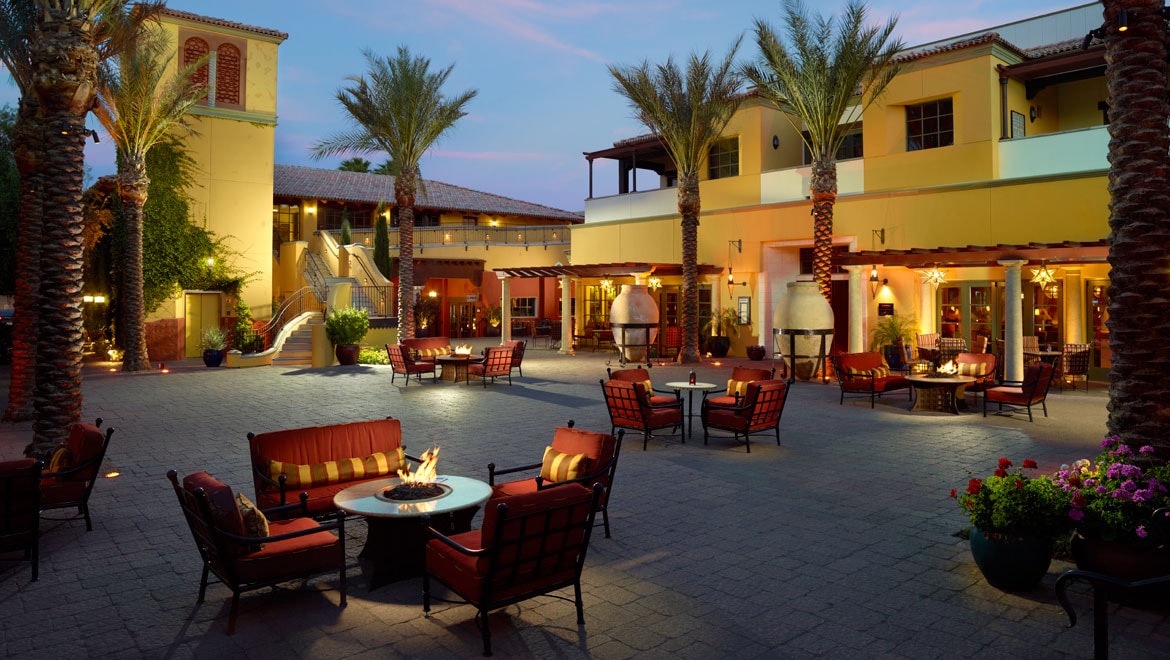
A Cortijo is a large country house or farm, often with outbuildings and is a typical architectural style of Andalusia region of Southern Spain. This description accurately represents the arrival plaza and the outbuildings housing the front desk, retail, café, bar, restaurant, wedding chapel, wine room, and second-level guest rooms and suites. This plaza is just one of the many areas in the resort designed to create an inviting, neighborhood feel. Cortijo Plaza is a gathering and meeting place for all people just like a plaza found in a small Andalusian town.
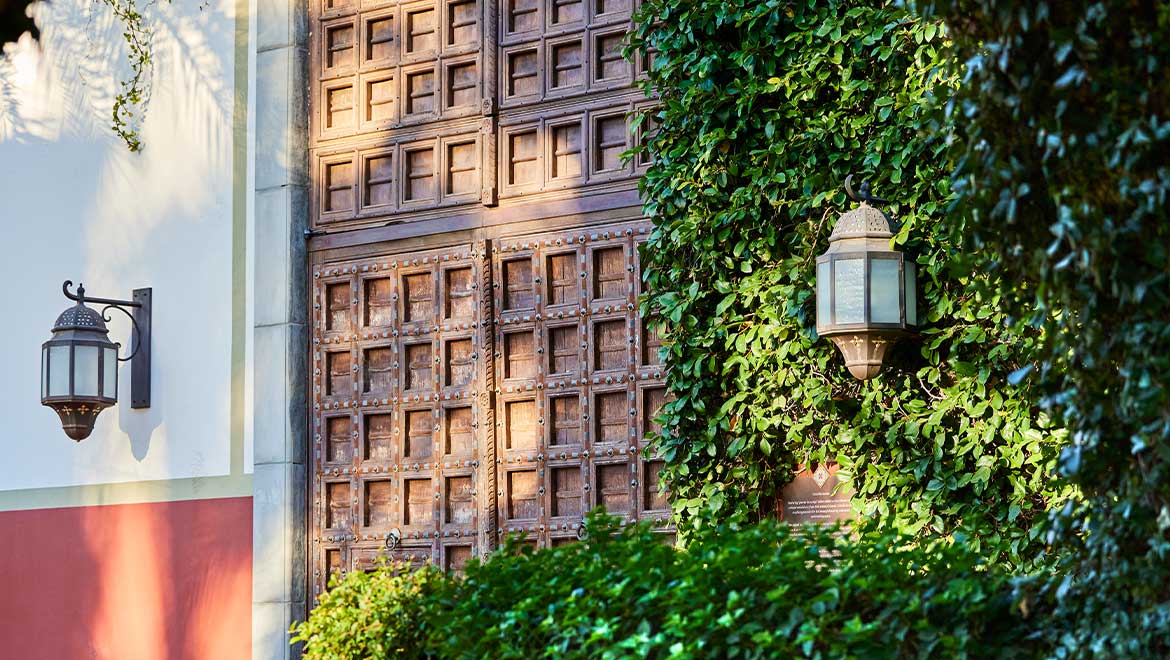
The phrase “Castillo Lucena” combines two Spanish words: “Castillo” and “Lucena,” each with its own distinct meaning. When translated individually, “Castillo” means “castle” and “Lucena” means “illumination” or “light.” In essence, “Castillo Lucena” as “Castle of Light” embodies the fusion of physical strength and intellectual enlightenment, creating a powerful and evocative concept that goes beyond its literal translation. The doors at the entrance to Castillo Lucena are from the 18th Century and made from solid teak wood. These doors were sourced from the Portuguese colony of Goa and features a total of 72 framed panels including a small “zaguan” (door within a door).
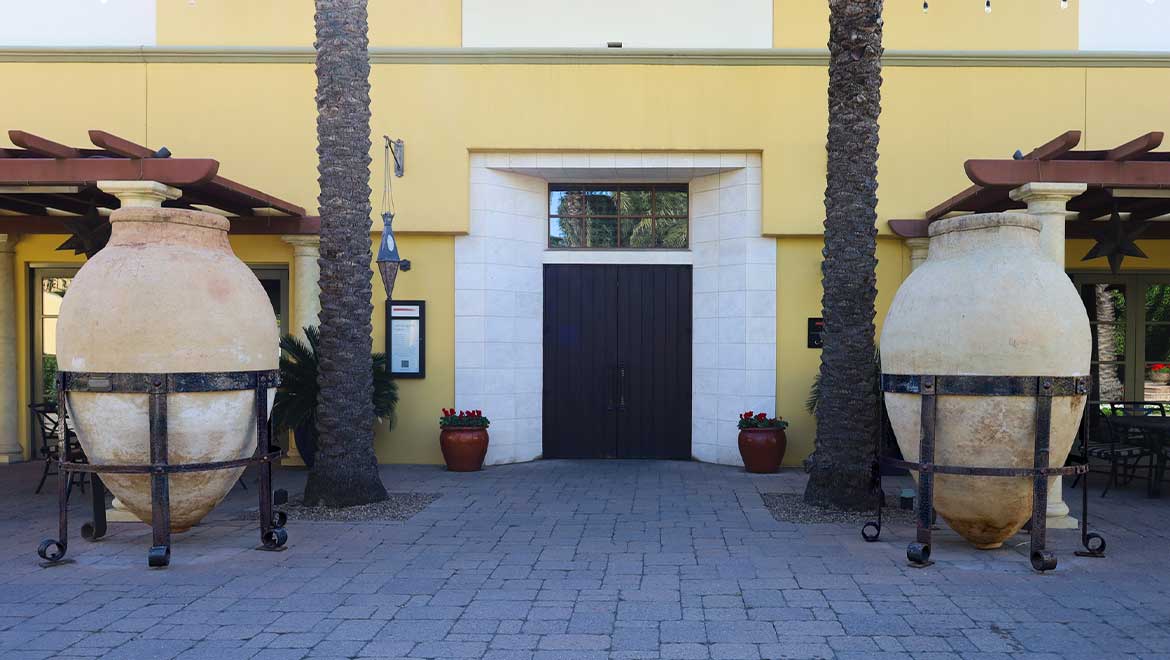
The two large oil jars outside the entrance of Prado came from 1790-1810 province of Jaen in northeastern Andalusia. Known as “tinajas” (oil jars), they were found on a Cortijo (Andalusian hacienda) near the town of Ubeda. The jars can hold up to 1,000 liters of oil.
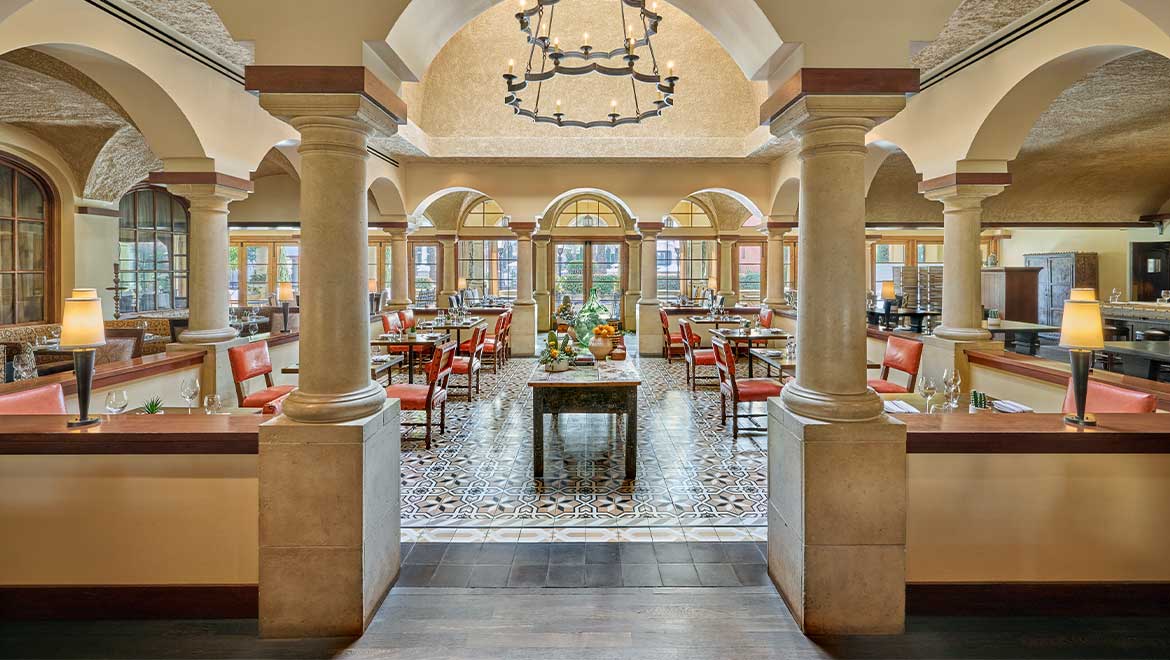
Prado is named after the National Museum of Spain (Museo del Prado) located in central Madrid. It features one of the world’s finest collections of European art, dating from the 12th century to the 19th century, based on the former Spanish Royal Collection. Both the interior of the restaurant and al fresco terrace are inspired by the architectural design of the Villa San Michelle, designed by Michelangelo in Tuscany, Italy. The artwork within the lounge area was created by California resident artists mirrored after the collection by Juarez Machado of Brazil.
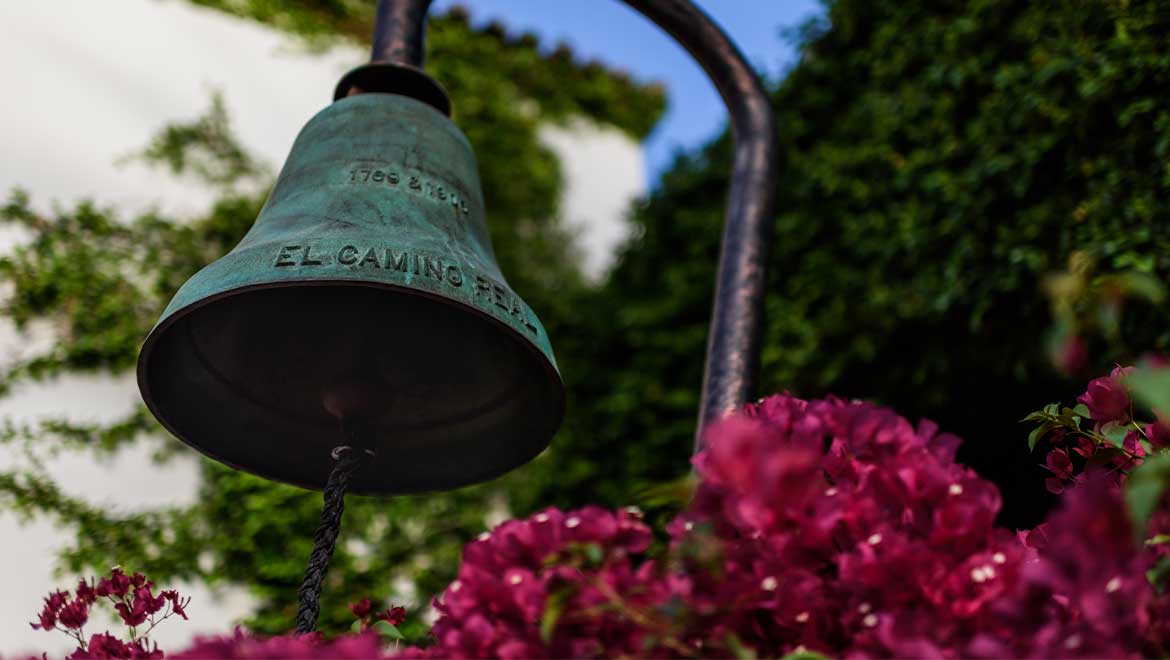
El Camino Real translates to “The Kings Highway.” Designed by a woman named Mrs. A.S.C. Forbes, who was also known as the first female bell maker in America, the Camino Real Bell was among 370 bells located along a footpath created to connect outputs along the California coast in 1769 beginning in San Diego. The dates on the bell show 1769-1906. 1769 refers to the founding of the first mission in San Diego and 1906 refers to the placements of the first bell in Los Angeles.
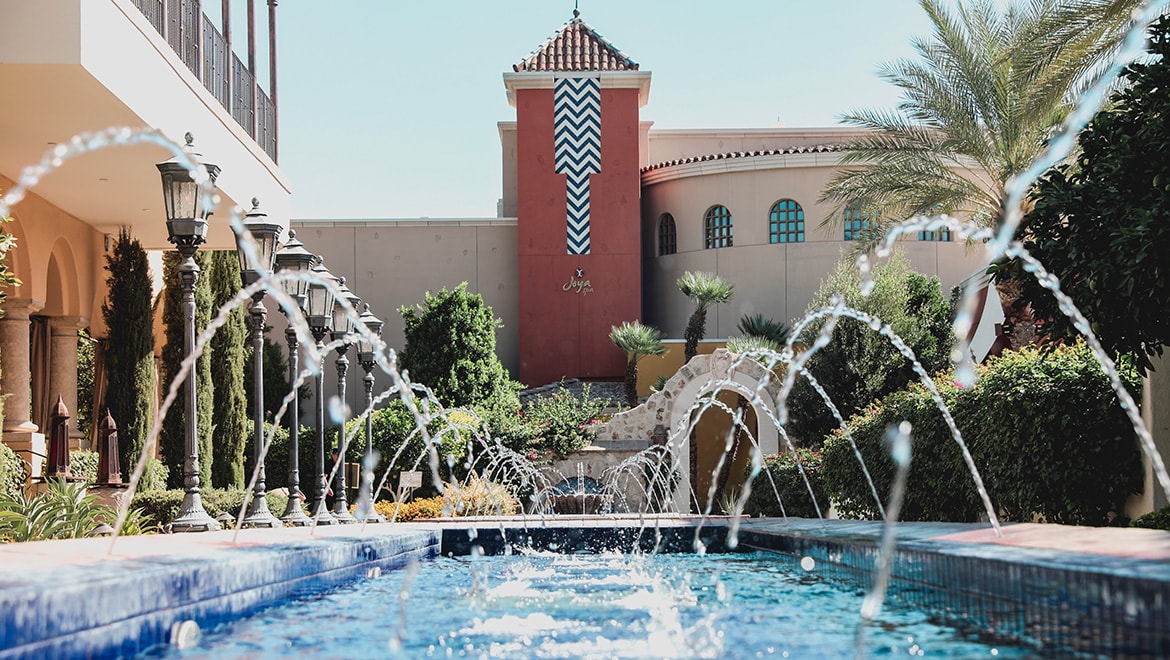
Located at the heart of our resort is Kasbah Fountain. Here, we gather every Friday and Saturday at dusk as our fountain reflects the warm, glowing light of the setting sun over Camelback Mountain. Guests are invited to cast a coin into the fountain — offering up their wildest wishes and dreams.
(copy)
You’ve selected an offer that is not compatible with your current offer.
To Keep "[CurrentOfferName]", press Cancel.
To Replace it with "[NewOfferName]" press Replace.
The dates you selected are not compatible with your selected offer. Our "[CurrentOfferName]" is only available [CurrentOfferAvailableStartDateText] - [CurrentOfferAvailableEndDateText].
You've selected [BookingSelectedStartDateText] - [BookingSelectedEndDateText].
Would you like to keep your selections and remove your offer? Or edit your booking to keep your offer?
This offer may be redeemed by calling Omni Hotels & Resorts at 888-444-6664